



Industrial Adhesive Applications
Industrial adhesive applications play a vital role in modern manufacturing, engineering, construction, and maintenance industries. As industrial technologies continue to advance, companies increasingly rely on high-performance adhesives to improve production efficiency, strengthen material bonding, and support long-term operational reliability.
In the past, industries primarily used mechanical fasteners such as bolts, screws, and welding to connect materials. However, industrial adhesives now provide more flexible, efficient, and durable bonding solutions for various applications. Because of their versatility, adhesives have become essential components in automotive manufacturing, electronics, aerospace, construction, heavy equipment maintenance, and industrial automation systems.
Today, industrial adhesives not only improve structural integrity but also help reduce production costs, minimize equipment downtime, and enhance overall product performance. Moreover, modern adhesive technologies continue to evolve to meet the growing demands of industries that require stronger, lighter, and more durable bonding solutions.
As industries focus more on efficiency and sustainability, industrial adhesive applications continue to expand across multiple sectors worldwide.
What Are Industrial Adhesives?
Industrial adhesives are specialized bonding materials designed to join surfaces and components together through chemical adhesion and cohesion. Unlike traditional fastening methods, adhesives distribute stress more evenly across bonded surfaces, which improves durability and reduces structural weaknesses.
Manufacturers formulate industrial adhesives to withstand demanding operational conditions such as high temperatures, pressure, vibration, chemicals, moisture, and corrosion. Consequently, these products are widely used in both heavy industrial operations and precision manufacturing environments.
Industrial adhesives are available in many different formulations depending on application requirements. Common types include:
Epoxy Adhesives
Epoxy adhesives provide excellent strength, chemical resistance, and durability. Industries commonly use them for structural bonding, machinery repair, and heavy-duty maintenance applications.
Acrylic Adhesives
Acrylic adhesives offer fast curing times and strong bonding performance across various materials. They are suitable for automotive, electronics, and industrial assembly operations.
Polyurethane Adhesives
Polyurethane adhesives provide flexibility, impact resistance, and moisture resistance. Therefore, industries frequently use them in construction, transportation, and outdoor applications.
Cyanoacrylate Adhesives
Cyanoacrylate adhesives, also known as instant adhesives, create rapid bonds between materials. They are ideal for precision assembly and quick repair tasks.
Anaerobic Adhesives
Anaerobic adhesives cure in the absence of air and are commonly used for threadlocking, sealing, retaining, and gasketing applications in machinery and industrial equipment.
Silicone Adhesives
Silicone adhesives provide excellent temperature resistance and flexibility. Industries often use them in electrical systems, sealing applications, and harsh environmental conditions.
Importance of Industrial Adhesive Applications
Industrial adhesives contribute significantly to modern industrial operations because they improve performance, efficiency, and product reliability.
Improved Structural Strength
Adhesives distribute stress evenly across bonded surfaces instead of concentrating force in a single location like mechanical fasteners. As a result, bonded structures become more durable and resistant to vibration or fatigue.
Reduced Material Damage
Traditional fastening methods often require drilling or welding, which can weaken materials. In contrast, adhesives preserve material integrity while creating strong connections.
Enhanced Production Efficiency
Industrial adhesives simplify assembly processes and reduce manufacturing time. Many adhesive systems cure quickly, allowing companies to accelerate production schedules.
Lightweight Manufacturing Solutions
Industries increasingly seek lightweight materials to improve efficiency and reduce energy consumption. Adhesives support lightweight manufacturing by eliminating the need for heavy metal fasteners.
Corrosion Prevention
Mechanical fasteners may create entry points for moisture and corrosion. Adhesives provide protective sealing that helps extend equipment lifespan and reduce maintenance costs.
Industrial Adhesive Applications Across Various Industries
Industrial adhesives serve a wide range of applications across multiple sectors. Each industry uses specialized adhesive technologies to meet unique operational requirements.
Automotive Industry Applications
The automotive industry heavily relies on industrial adhesives for structural assembly, vibration reduction, and lightweight manufacturing.
Manufacturers use adhesives to bond metal panels, plastic components, glass, and composite materials. Additionally, adhesives improve vehicle aerodynamics by eliminating visible fasteners and creating smoother surfaces.
Modern electric vehicles also depend on advanced adhesive technologies for battery assembly, thermal management, and electronic component protection.
Furthermore, industrial adhesives improve passenger safety because bonded structures absorb impact energy more effectively during collisions.
Aerospace Industry Applications
The aerospace industry demands high-performance bonding solutions that can withstand extreme operational conditions. Aircraft manufacturers use industrial adhesives for lightweight composite structures, insulation systems, and structural bonding applications.
Because aircraft weight directly affects fuel efficiency, adhesives help reduce overall weight while maintaining structural strength.
Additionally, aerospace adhesives resist temperature fluctuations, vibration, and harsh environmental exposure, ensuring reliable long-term performance.
Electronics Industry Applications
Industrial adhesives play an essential role in electronics manufacturing. Companies use specialized adhesives for circuit board assembly, component protection, heat dissipation, and electrical insulation.
As electronic devices become smaller and more advanced, manufacturers require precise bonding solutions that support miniaturized components and delicate assemblies.
Moreover, adhesive technologies help protect electronic systems from moisture, dust, chemicals, and vibration damage.
Construction Industry Applications
The construction industry uses industrial adhesives for flooring systems, wall panels, insulation materials, roofing components, and structural bonding applications.
Adhesives improve installation efficiency while providing strong and durable connections between building materials.
In addition, many modern construction adhesives support energy-efficient building designs by improving insulation performance and reducing air leakage.
Heavy Equipment Maintenance and Repair
Industrial maintenance operations frequently use adhesives for machinery repair, protective coatings, and equipment refurbishment.
For example, epoxy repair compounds help restore damaged metal surfaces, while threadlocking adhesives prevent fastener loosening caused by vibration.
Protective coating systems also help shield industrial equipment from corrosion, abrasion, and chemical exposure.
Consequently, companies can reduce equipment downtime and extend machinery lifespan significantly.
Marine Industry Applications
Marine environments expose equipment and structures to moisture, saltwater, and corrosion. Therefore, marine industries use industrial adhesives for sealing, bonding, and protective coating applications.
Adhesives help improve water resistance while reducing maintenance requirements for ships, offshore platforms, and marine infrastructure.
Renewable Energy Industry Applications
Renewable energy systems such as wind turbines and solar panels also depend on industrial adhesives.
Wind turbine manufacturers use adhesives to bond composite blades and structural components. Meanwhile, solar panel systems require adhesive technologies for sealing and environmental protection.
As renewable energy infrastructure continues to expand globally, adhesive applications within this sector continue to grow rapidly.
Advantages of Industrial Adhesives Over Traditional Fastening Methods
Industrial adhesives offer several important advantages compared to traditional joining methods.
Better Aesthetic Appearance
Adhesives create smooth and clean surfaces because they eliminate visible bolts, screws, and weld marks.
Multi-Material Bonding Capability
Adhesives can bond dissimilar materials such as metal, plastic, glass, rubber, and composites effectively.
Vibration and Noise Reduction
Bonded joints absorb vibration more efficiently than rigid mechanical fasteners. Therefore, adhesives help reduce operational noise and improve equipment stability.
Sealing and Protection
Many adhesives provide both bonding and sealing functions simultaneously, which improves moisture resistance and environmental protection.
Reduced Manufacturing Complexity
Adhesives simplify assembly processes and reduce the need for complex mechanical joining operations.
Challenges in Industrial Adhesive Applications
Although industrial adhesives provide many benefits, industries must also consider several application challenges.
Surface Preparation Requirements
Proper surface preparation is critical for achieving strong adhesive bonds. Contaminants such as oil, dust, rust, or moisture may weaken bonding performance.
Environmental Conditions
Temperature, humidity, and chemical exposure can affect adhesive curing and long-term durability. Therefore, selecting the correct adhesive formulation is essential.
Curing Time Considerations
Some industrial adhesives require specific curing times before reaching full strength. Manufacturers must consider these factors during production planning.
Material Compatibility
Not all adhesives work effectively with every material type. Consequently, proper technical consultation and product selection are important for successful applications.
Future Trends in Industrial Adhesive Applications
Industrial adhesive technologies continue to evolve alongside modern manufacturing innovations.
Sustainable Adhesive Technologies
Industries increasingly demand environmentally friendly adhesives with reduced volatile organic compounds (VOC) and improved sustainability performance.
Smart Adhesives
Researchers are developing smart adhesives capable of monitoring structural conditions, detecting damage, and responding to environmental changes.
High-Performance Composite Bonding
As industries adopt advanced composite materials, adhesive technologies continue improving to support lightweight and high-strength applications.
Automation in Adhesive Application
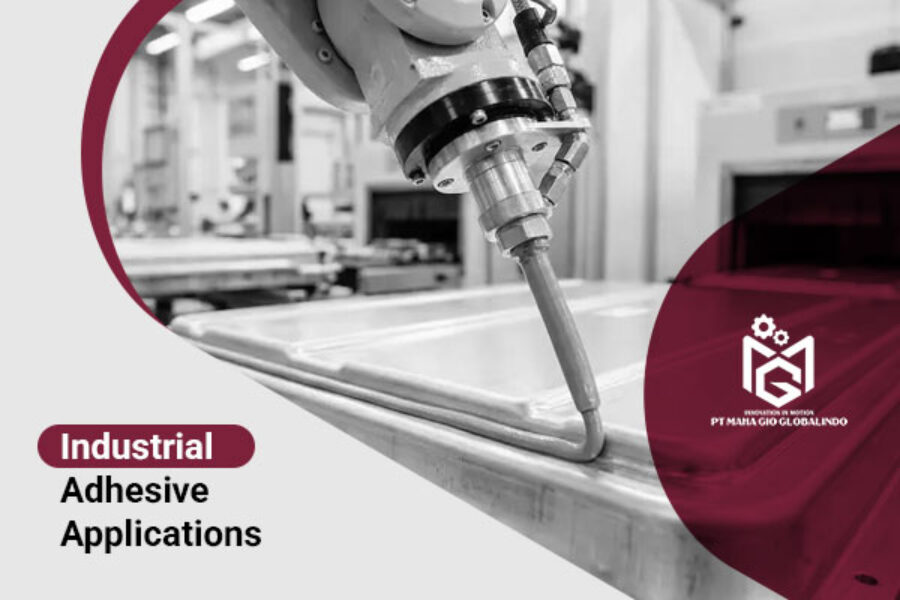
Automated dispensing systems and robotic application technologies improve adhesive precision, consistency, and production efficiency.
Choosing the Right Industrial Adhesive Solution
Selecting the appropriate adhesive requires careful evaluation of operational conditions, materials, and performance requirements.
Understand Application Requirements
Industries should evaluate temperature exposure, chemical resistance, mechanical stress, and environmental conditions before selecting adhesives.
Prioritize Product Quality
High-quality industrial adhesives provide better reliability, durability, and long-term performance.
Seek Technical Support
Professional technical support helps companies identify suitable adhesive products and application methods for specific industrial needs.
Work With Trusted Suppliers
Reliable suppliers ensure product authenticity, technical guidance, and consistent product availability.
Conclusion
Industrial adhesive applications continue to transform modern industries by providing stronger, more efficient, and more flexible bonding solutions. From automotive manufacturing and aerospace engineering to electronics, construction, and heavy equipment maintenance, adhesives support countless industrial processes worldwide.
As industries continue prioritizing efficiency, durability, sustainability, and lightweight manufacturing, industrial adhesives will remain essential components of modern engineering solutions. Furthermore, innovations in adhesive technology continue expanding application possibilities across emerging industrial sectors.
By selecting high-quality industrial adhesives and working with experienced suppliers, businesses can improve operational reliability, reduce maintenance costs, and enhance overall production performance. Therefore, industrial adhesive solutions will continue playing a crucial role in supporting industrial growth and technological advancement in the future.